Bidet seat features explained
A plain-English map of wash modes, heaters, dryers, remotes and the buttons you can ignore on an Australian bidet seat.
Published 2026-02-18 · Updated 2026-07-21 · 12 minute read
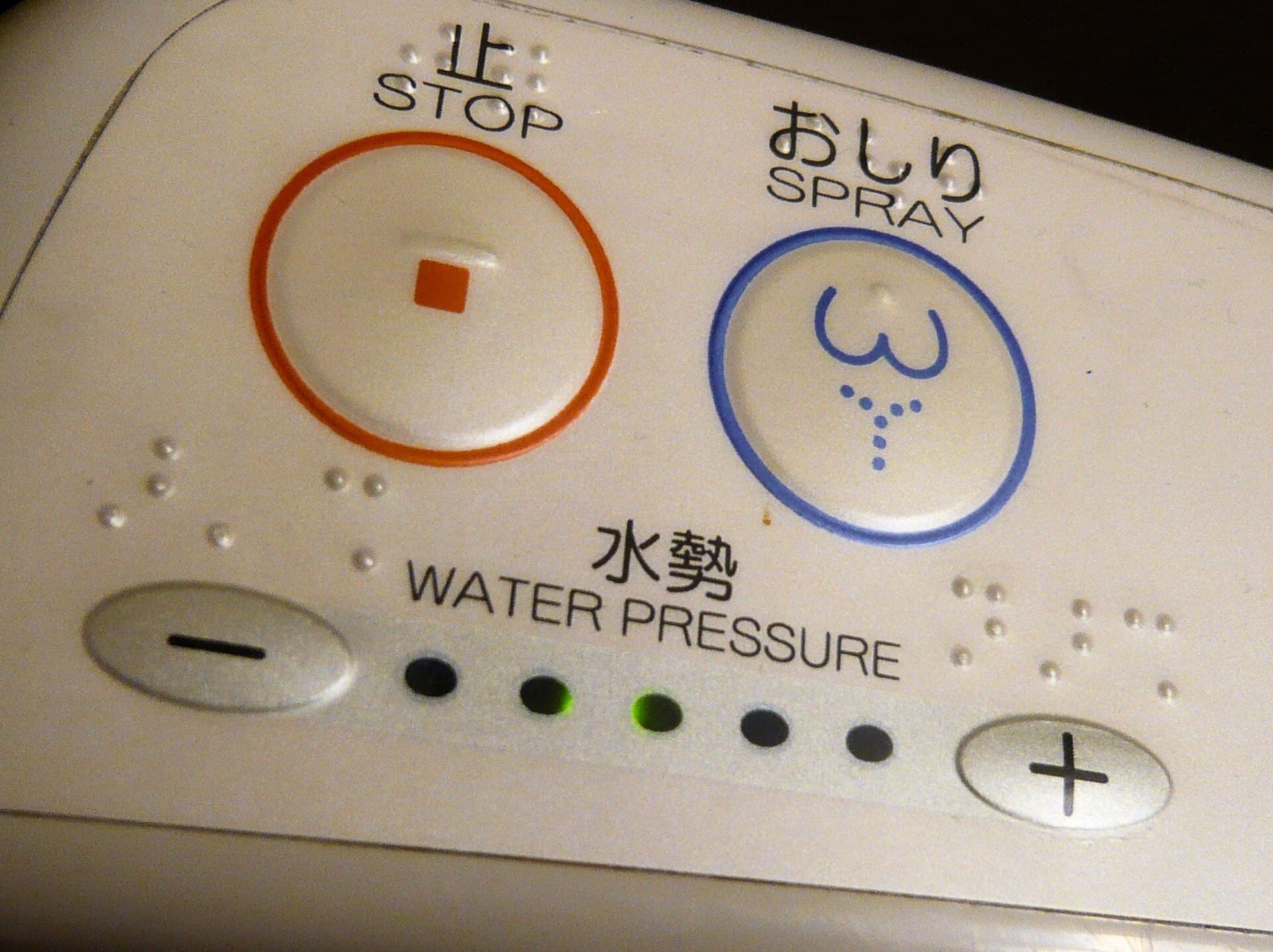
Photo: Japanese toilet buttons by Stéphane Le Dû, via Wikimedia Commons, licensed CC BY-SA 2.0. Also listed on the image credits page.
Open a bidet-seat box and you will find a remote that looks like a 1990s car stereo. The pictograms are optimistic. This glossary is for the features that change an Australian bathroom, and the ones that only change the carton.
If you have not chosen a type yet, keep which bidet seat for you nearby.
Wash modes
Rear wash is the whole product. You want pressure you can turn down, a position you can move forward and back, and a stream that does not wander when the mains pressure dips.
Oscillating or moving wash walks the nozzle so you do not sit there aiming like a gardener. Useful. Not magic.
Front or feminine wash is a softer, more forward pattern. It matters after birth, during menstruation, and for anyone who finds paper abrasive. It does not replace a shower and it does not treat infection. See bidets and sensitive skin and bidets after childbirth.
Kids’ mode is lower pressure and often a shorter cycle. If grandchildren visit, it is kinder than hoping they guess the icons.
Heat, tanks and the dry button
Tank heaters store a small reservoir. The first wash is ready; a second wash in a busy household can go lukewarm.
Tankless heaters warm water as it passes. They want decent electrical supply and they punish weak circuits.
Heated seats are comfort, and for some bodies they are the difference between using the thing and avoiding it. Heated bidet seats in Australia covers warmth without treating it as a medical device.
Warm-air dryers are slow if you expect a hairdryer. They are fast if the alternative is a carer leaning in with paper. That is why they show up throughout the accessibility hub.
Controls, lights and the rest of the circus
Side panels stay with the seat. Guests find them. People with limited shoulder rotation do not.
Remotes need a wall cradle that a cleaner will not knock into the pan. They also need a battery plan.
Soft-close lids are a courtesy to the rest of the house.
Night lights stop shin-to-cistern incidents. They are not a reason to pick a brand.
Deodorisers are a small fan and a filter. Clean the room; do not expect charcoal to hide a plumbing fault.
Self-cleaning nozzles rinse. They do not descale. How to clean and maintain a bidet is the actual hygiene feature.
Features that interact with Australian rules
A seat can glow and still be illegal to connect. WaterMark and backflow sit above every icon. Read WaterMark certification for bidet seats and backflow prevention before the remote becomes the personality of the purchase.
Electric features assume a safe GPO. That is power points for electric bidet seats, not a power board behind the pan.
If the feature list is how you are justifying a price, check how much a bidet costs in Australia so you know which buttons you are actually buying.
Questions readers actually ask
- Which bidet features are worth paying for?
- Adjustable rear wash, reliable water temperature, a nozzle that cleans itself, and a control you can actually use. Dryer and remote become essential when mobility is the reason you bought the seat.
- What is a feminine wash on a bidet seat?
- A milder, usually more forward spray intended for vulval cleaning. It is a nozzle angle and pressure change, not a medical device.
- Do I need an enema or strong massage mode?
- Almost never. Those modes are easy to misuse and they are a poor reason to pick a seat. If bowel care is clinical, that is a continence conversation, not a feature tick-box.
Keep reading
- First time using a bidet seat
A written version of the old site’s virtual bidet experience — what the first washes feel like, what to expect, and how not to flood the floor.
- Heated bidet seats in Australia
Why a warm ring and warm water matter in a country that still builds unheated bathrooms, and when heat is wasted money.
- Electric versus non-electric bidet seats
Warm water, dryers and remotes against the quieter honesty of a cold-water seat that does not need a GPO.