How to clean and maintain a bidet
A no-nonsense Australian maintenance routine for nozzles, filters, seals and the bits of a seat that quietly become unhygienic.
Published 2026-08-05 · Updated 2026-09-17 · 12 minute read
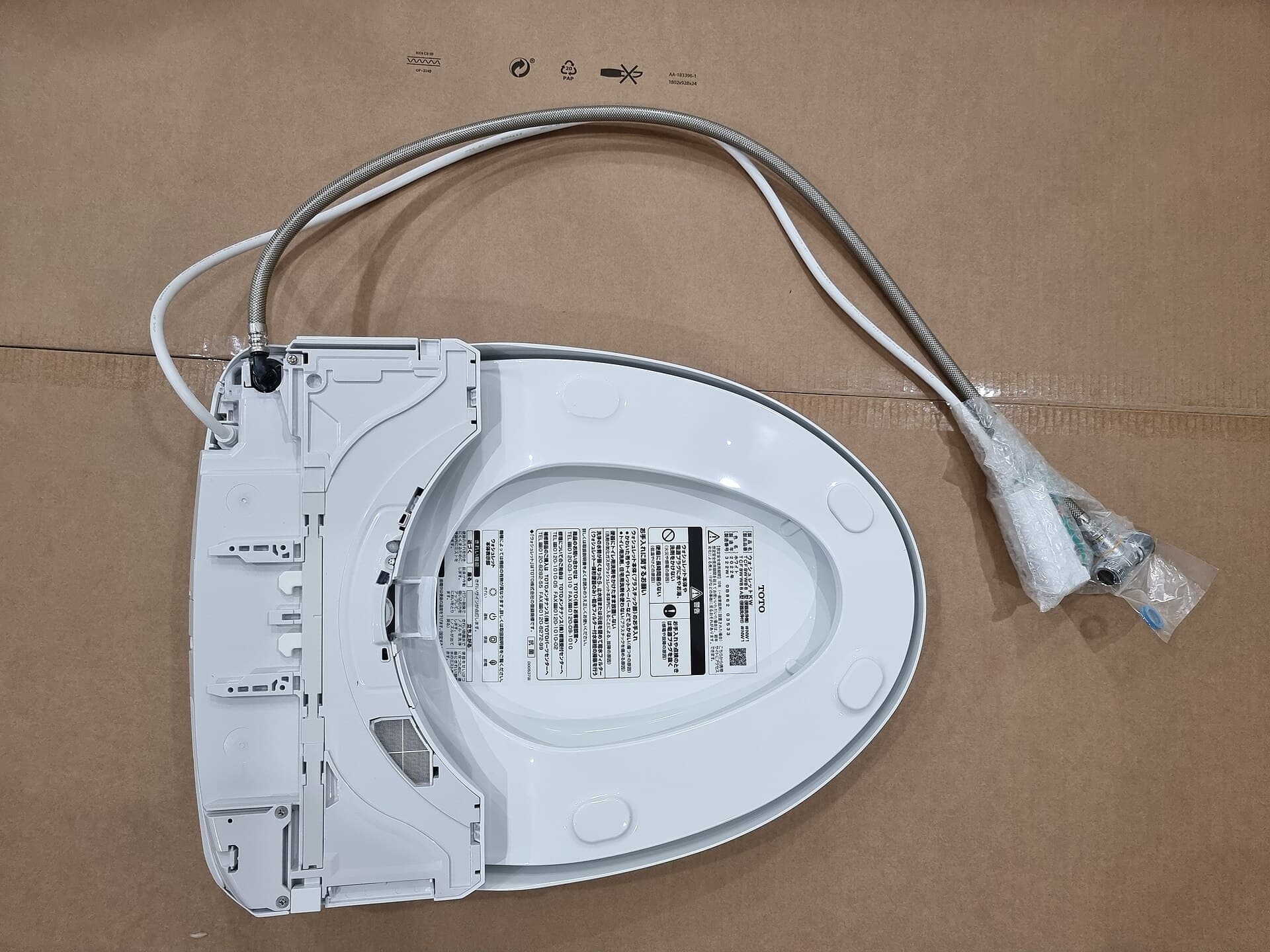
Photo: Toto Washlet TCF8WW88, bottom view by Benlisquare, via Wikimedia Commons, licensed CC BY-SA 4.0. Also listed on the image credits page.
A bidet seat that is never cleaned is a hygiene project that failed. The nozzle hides. The filter sulks. The gap under the pan becomes a nature strip. Ownership is a cloth and a calendar.
If something is broken rather than dirty, skip to common bidet problems.
Daily and weekly
Wipe the ring and lid with the same mild product you trust on other bathroom plastic. Run the self-clean if the seat has one. You still need eyes. Self-cleaning is a rinse, not a religion.
If you share the bathroom with kids or guests, glance at the nozzle after their experiments. The first-time guide does not cover glitter soap.
Monthly, or whenever the water is hard
Descale the nozzle as the manual describes. Hard water areas — and plenty of Australian towns qualify — clog a pretty spray into a sideways insult. Remove the nozzle if the design allows. Do not force a bayonet you cannot see.
Check the inlet filter if there is one. A starved heater is often a clogged gauze.
The unglamorous underside
Pull the seat forward on its quick-release if it has one. Clean the landing. Look at the hoses. A slow drip at the tee is not “character”; it is plumbing.
Keep paper and wet wipes out of the nozzle’s personality. Wipes belong in the bin even when you own a wash.
What not to do
No abrasive pads on soft plastic. No mystery tablets in the tank. No essential oils “for wellness”. Sensitive skin starts with what you add.
Unplug electric seats before you soak anything you should not soak. Water and power remain a pair of facts.
A clean seat is the hygiene argument
Bidets versus paper only holds if this page is boringly routine. Carers should put it on the same chart as the shower chair — carers and aged care.
When the seat is clean and still rude, it is a fault. When it is dirty, it is a habit. The everyday use hub holds both.
Questions readers actually ask
- How often should I clean a bidet seat?
- Wipe the ring as often as you would a normal seat. Rinse the nozzle on its clean cycle after messy days, and descale on a schedule that matches your water hardness.
- Can I use bleach on the nozzle?
- Do not invent a chemical plan. Use what the manufacturer allows — usually mild soap on the plastic and a specified descaler for the nozzle. Bleach finds seals and ruins them.
- Why does my bidet smell?
- A dirty nozzle, a neglected filter, or a leak that has been quietly living under the pan. Clean it. If the smell stays, read the problems guide and call a plumber.
Keep reading
- Bidets and water restrictions
How to keep a bidet seat polite in a drought year — short washes, no demonstrations, and the leaks that matter more than the nozzle.
- Common bidet problems and fixes
Weak spray, rogue leaks, angry RCDs and remotes that drown — what to check before you decide the seat is finished.
- Do bidets save water in Australia
A litres-and-paper accounting of bidet seats in a dry country — what a wash uses, what a flush still uses, and where the savings actually sit.